Professor Nigel Raine
Rebanks Family Chair in Pollinator Conservation
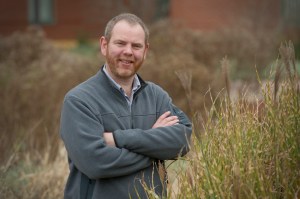
Nigel is a global leader in the fields of animal behaviour, pollination ecology and pollinator conservation. He is the Rebanks Family Chair in Pollinator Conservation at the University of Guelph, a position endowed by the Weston Family Foundation. Nigel’s work combines internationally excellent research, significant engagement with policy-makers and other conservation-relevant stakeholder groups, and teaching the world’s first pollinator conservation course.
Nigel has been lucky enough to spend more than 25 years investigating bees and their intimate relationships with flowers on three continents. Before moving to Canada in 2014, he studied at the University of Oxford, worked as a postdoctoral researcher at the University of Sheffield and Queen Mary University of London, and held his first faculty position at Royal Holloway University of London.
Nigel has published 111 peer-reviewed articles, attracted more than 14500 citations and achieved an H-index of 56. He is an elected fellow of both the Royal Entomological Society (FRES) and the Linnean Society of London (FLS). In 2014, Nigel was recognized as a World Economic Forum Young Scientist – one of 40 outstanding researchers under the age of 40, and was elected to the College of New Scholars of the Royal Society of Canada in 2017.
For more on please see Nigel’s Q&A piece for Current Biology or check him out on Twitter (at) NigelERaine.
Dr. Amanda Liczner
Postdoctoral Research Fellow (2021-present)

Amanda’s research examines how the foraging and dispersal behaviour of bumble bees change when exposed environmental stressors. Bumble bee movement behaviour will be monitored using radiotracking techniques in different landscapes. She is also working with University of British Columbia and Environment and Climate Change Canada researchers to synthesize challenges in conducting connectivity conservation research. Amanda completed her PhD in 2020 at York University supervised by Dr. Sheila Colla where she focused on identifying important habitat characteristics and conservation priority areas for North American bumble bee species. To find out more about Amanda’s research, visit her website or follow on Twitter.
Dr. Susan Chan
Postdoctoral Research Fellow (2022-present)

Susan’s research examines how agricultural practices (including pesticide exposure) affect the behaviour, ecology and persistence of native ground-nesting hoary squash bee (Xenoglossa (Peponapis) pruinosa) populations. Susan’s postdoctoral research continues from her PhD thesis work on these important solitary bee pollinators of cucurbit crops completed in the Raine lab in 2020. In 2022 Susan edited Promoting Pollination and Pollinators in Farming (Burleigh Dodds Science Publishing). Working in collaboration with Dr. Lora Morandin (Pollinator Partnership Canada), Susan has developed SCOUT IPPM – a mobile app that let’s growers monitor their pumpkin or squash crops for pests and pollinators, and provides integrated management recommendations specific to each farm. In 2020 Susan was awarded a prestigious Seeding Food Innovation award to develop and test dispersal of fungal biocontrol agents to strawberry using honey bees (Apis mellifera) as vectors (2020-2022). Susan is also researching practical and sustainable solutions for overwintering honey bee colonies to facilitate domestic queen breeding efforts in Canada in collaboration with PhD student Grace McKinney and Jerry Jerrard (Kawartha Lakes Honey).
Dr. Sabrina Rondeau
Postdoctoral Research Fellow (2022-present)
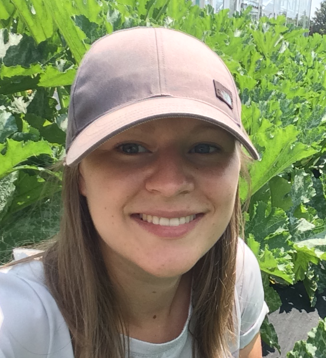
Sabrina’s research focus lies at the interface between pollinator conservation and sustainable food production. For her postdoc project, she is investigating (a) the responses of ground-nesting bee communities to tillage and pesticide exposure from agricultural soils in field crops and (b) the dual effects of warmer winter temperatures and exposure to pesticide residues in soil on hibernating bumblebee queens. Sabrina’s postdoctoral research is being co-supervised by Dr. Jessica Forrest at the University of Ottawa.
Sabrina’s current research builds from her PhD thesis work completed in the Raine lab in 2022, for which she was awarded the 2023 CAGS-Proquest Distinguished Dissertation Award – a prize that recognizes ‘Canadian doctoral dissertations that make unusually significant and original contributions’. Her current research is being funded by postdoctoral fellowships from the Weston Family Foundation, NSERC, and the FRQNT.
Sabrina is also the co-founder of Abeilles citoyennes, a citizen science project monitoring pollinator biodiversity in Quebec’s agricultural areas.
To learn more about Sabrina’s research visit her website
Kiera Newman
PhD Student (2017-present)
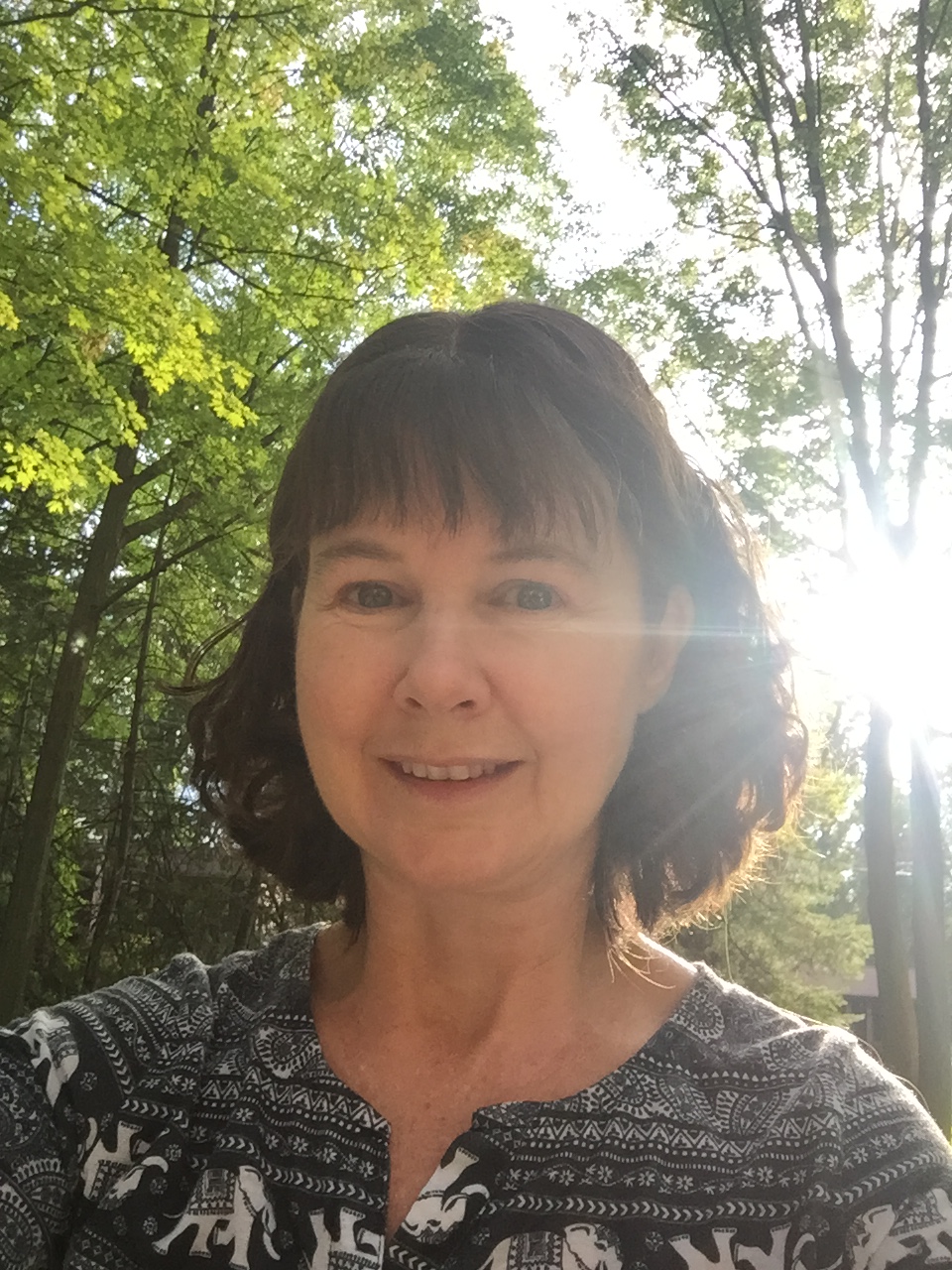
Kiera is a PhD candidate exploring the behavioural and biological responses of pollinators to various environmental stressors and the conservation strategies needed to ensure healthy future populations. Her work will assess current nesting and foraging resources of wild bees and monarch butterflies and the impact of anthropogenic influences on those resources. Kiera will also be studying the intersection between monarch conservation practices and the impact of massive floral plantings on wild bee populations. Her research goals aim to inform conservation planning for productive agricultural systems and biodiverse natural ecosystems.
Samm Reynolds
PhD Student (2020-present)

Samm is currently working on a PhD thesis investigating the effect of different habitat types on the abundance and diversity of native pollinators. Her work is conducted on agricultural land in Ontario in hopes of understanding how to increase sustainable agriculture practices. She is focusing her work primarily on flower flies and native bees and identifying each specimen to species level using taxonomic keys and DNA barcoding! Samm has been collaborating on this project with the Canadian Wildlife Federation and expert fly taxonomist Dr. Jeff Skevington since the summer of 2019. Her PhD project is being co-supervised by Dr. Andrew Young and Dr. Nigel Raine. Samm is a passionate conservationist and loves to discuss all things nature and sustainable living in her free time. She can be contacted by email sreyno08@uoguelph.ca and found on Twitter (at) EntoSamm.
Tovah Kashetsky
PhD student (2022-present)
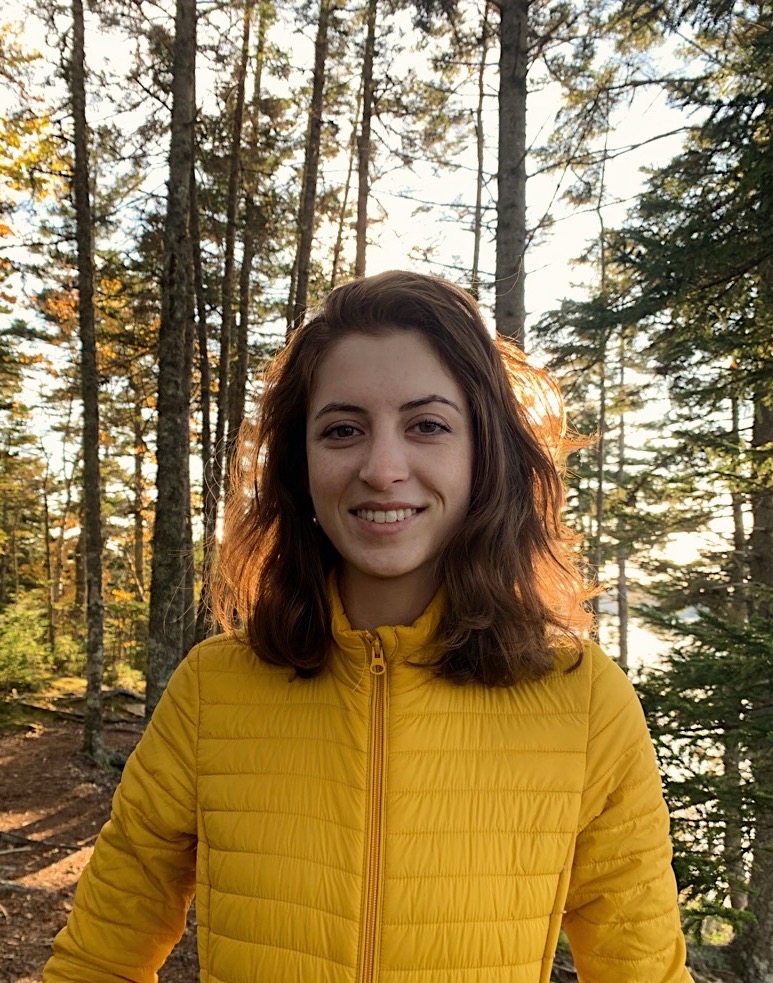
Tovah is studying learning, memory, and decision-making in wild bees, and how these cognitive abilities vary across species and environments. After finishing her BSc in Biology and Psychology from Dalhousie University, she completed a MSc from McMaster University where she tested the effects of experience on collective decision-making using ants. Tovah is fascinated with animal behaviour and cognition, and would like to apply a cognitive perspective to conservation. Tovah’s PhD project is being co-supervised by Dr. Jessica Forrest at the University of Ottawa. She can be contacted via email tkash084 “at” uottawa.ca or follow her on Twitter.
Grace McKinney
PhD student (2022-present)

Grace has a background in biology and cultural anthropology and believes strongly in the value of interdisciplinary research. Her current interests lie in the realm of the honeybee. Grace obtained her Bachelor of Science in Conservation Biology and Anthropology, and her Master of Arts in Cultural Studies, both from Trent University. For her Masters, Grace attempted to explore the world through the eyes of the honeybee and wrote on the relationship found between place and taste in honey.
For her PhD project, Grace is grateful to work in collaboration with Kawartha Lakes Honey. Grace will be researching methods of overwintering honeybee colonies and queen rearing, under the supervision of Dr. Susan Chan and Prof. Nigel Raine. Grace is excited to be conducting this meaningful research, and is looking forward to the challenges and learning to come.
Grace can be contacted through email at gmckinne@uoguelph.ca.
Marianne Goulet
MSc student (2025-present)
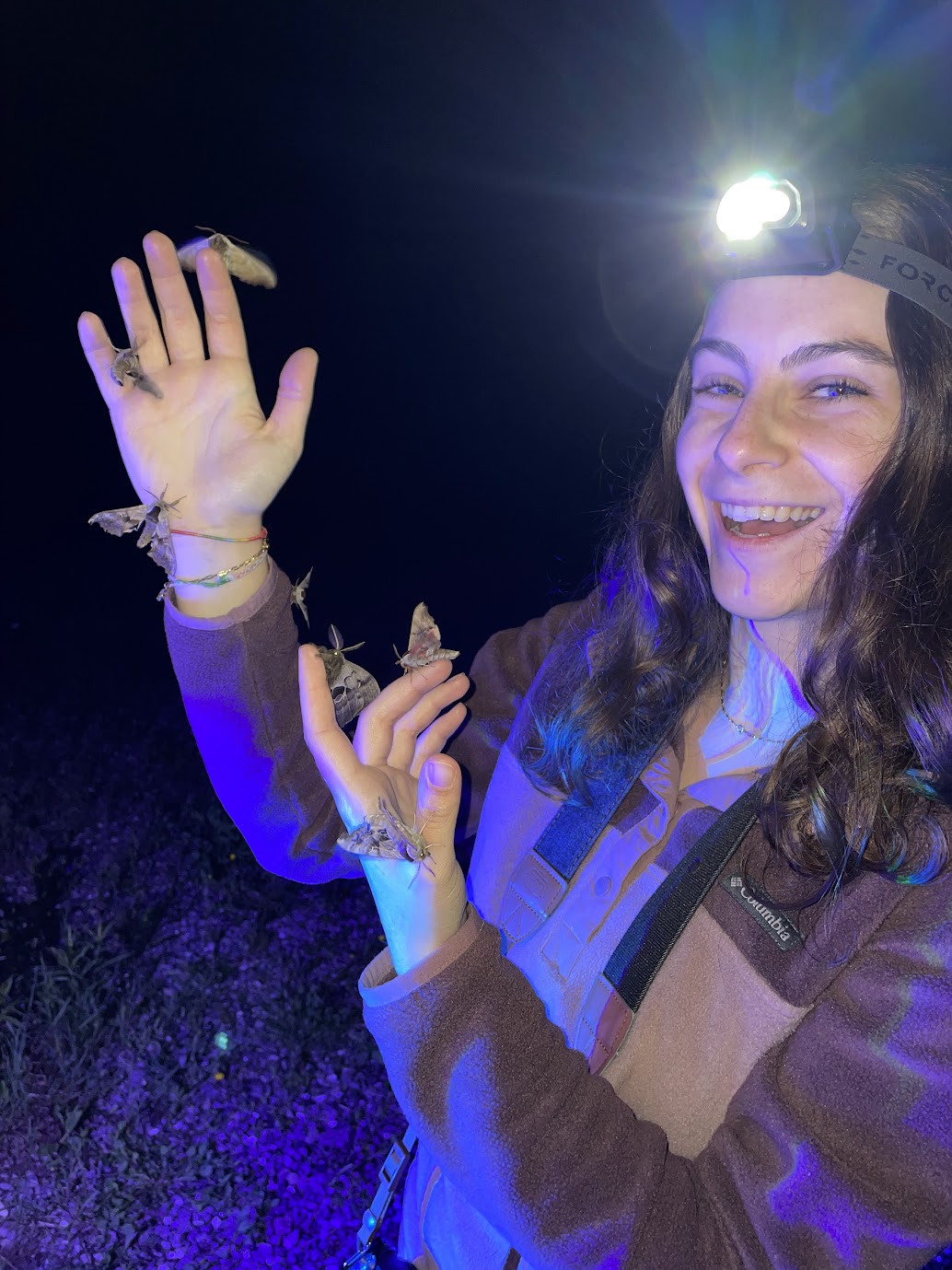
Marianne’s MSc research (co-supervised by Dr. Ryan Norris) focuses on studying the impact of environmental stressors on insect navigation behaviour. More specifically, she is examining how captive rearing might affect the ability of monarch butterflies (Danaus plexippus) to orient during migration. Marianne will also be investigating how common eastern bumble bees (Bombus impatiens) queens navigate to find their nesting spots after overwintering in soils containing pesticides. While Bombus impatiens is not of specific conservation concern, but many ground-dwelling bee specis are declining. Understanding how pesticide-contaminated soil affects bee navigation could provide insight into how to protect them. To observe their movements in their natural environments, Marianne is going to be using tiny solar-powered radio trackers (CTT Blū+) attached to the thorax of monarchs and the abdomens of bumble bees.
Marianne completed her BSc (Honours) in Biology at the Université de Montréal, after beginning it at the University of Alberta. Her undergraduate thesis project focused on the temporal diversity of microparasitic wasps in the Laurentian Forest in Quebec. While completing her undergraduate degree, Marianne also had the opportunity to work as a research assistant in two different labs at the Institut national de la recherche scientifique (INRS), where she studied microbial entomology using Conophthorus coniperda and Tenebrio molitor as model organisms.
Sydney Rack
MSc student (2024-present)
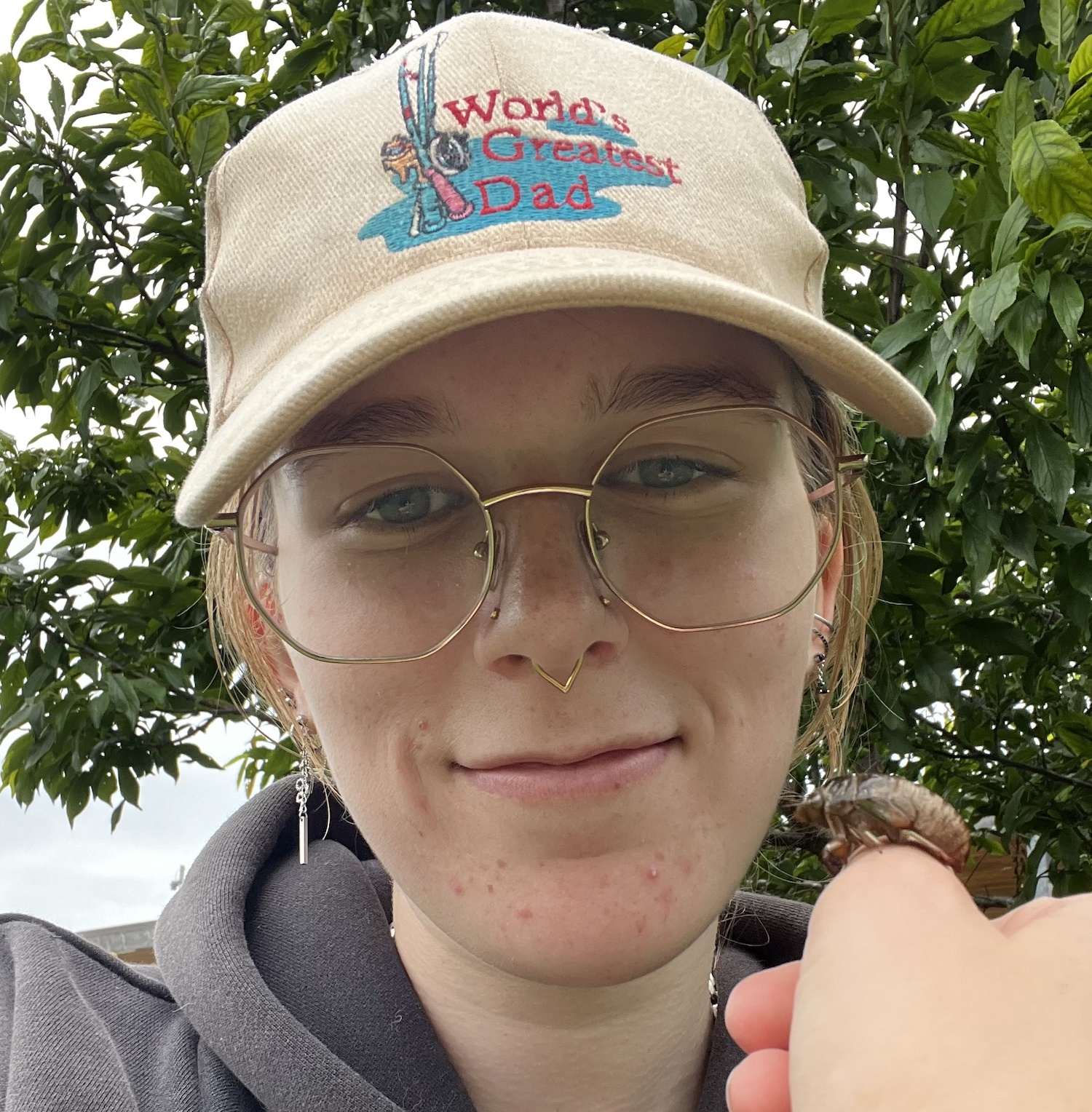
Sydney’s masters research focuses on the use of biological control and behaviour alteration to manage the Plum curculio (Conotrachelus nenuphar) beetle a pest in apples and other fruit crops. Using entomopathogenic nematodes, fungi and ‘trap trees’, Sydney aims for her research to offer an environmentally friendly and economically viable way to reduce crop loss caused by Plum curculio. Sydney received her BSc in Biological Science from the University of Ontario Institute of Technology and is also a graduate of the Horticulture Technician program at Durham College. In 2024, she received the RBC Urban Agriculture Work Integrated Learning Program Grant for her initiative to rear insects and nematodes for biological control on urban and small-scale farms. Her MSc project is co-supervised by Prof. Nigel Raine and Dr. Justin Renkema from Agriculture and Agri-Food Canada.
Hayley Tompkins
MSc student (2018-present)
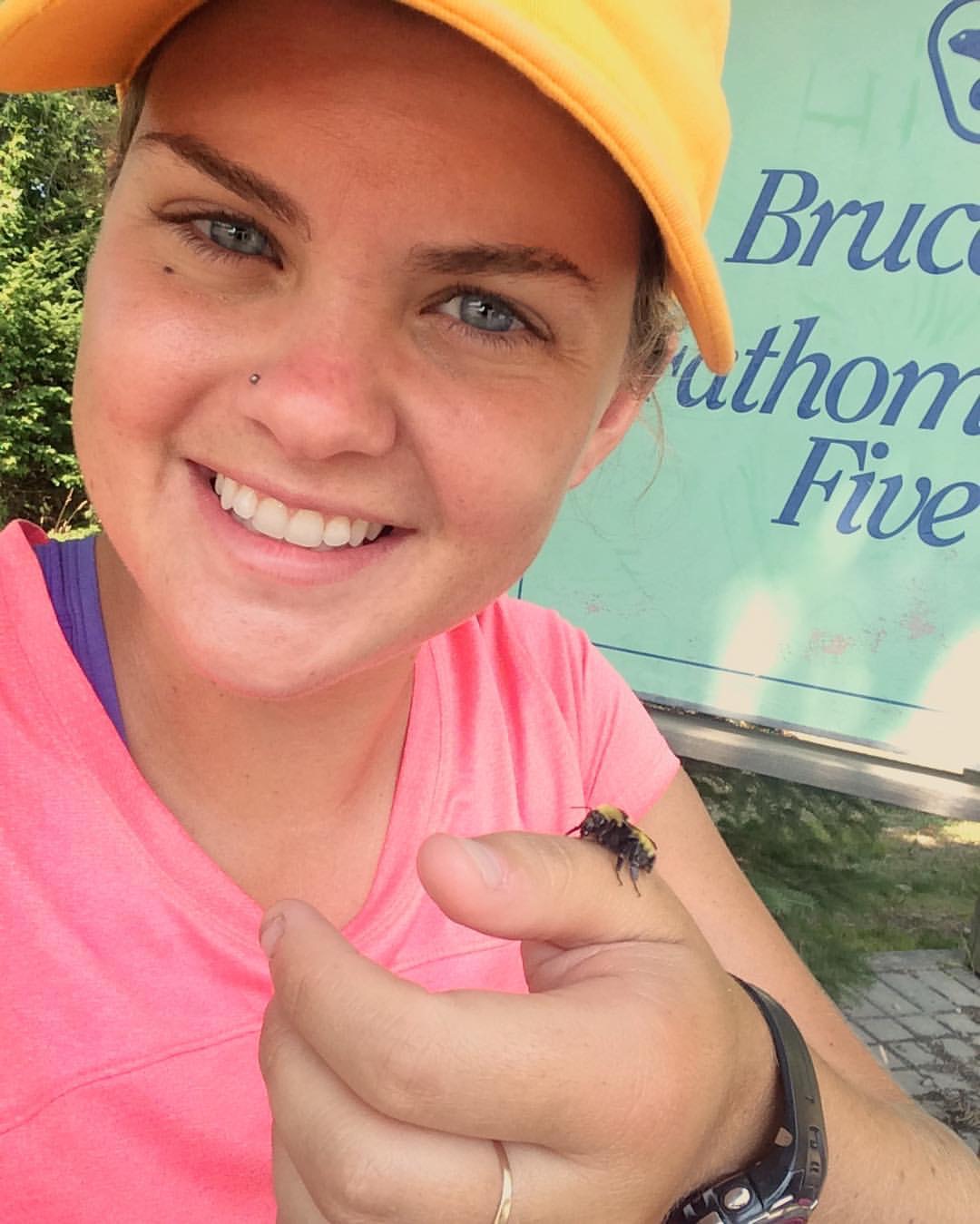
Hayley is working on an MSc project in the Raine Lab. Her research, in collaboration with Wildlife Preservation Canada (WPC), focuses on the use of artificial nest boxes to study nesting habits and colony development of wild bumblebees. Artificial nest boxes have been installed and monitored at sites historically or currently occupied by species at-risk, to determine the efficacy of artificial nest boxes as a conservation and monitoring tool. In 2017, Hayley served as the Field Biologist in Ontario for WPC’s Native Pollinator Initiative, and was selected as a LoyaltyOne Young Conservation Leader. She holds a Bachelor’s degree in Geography with a minor in GIS and Environmental Analysis from the University of Guelph, and is a graduate of Seneca College’s Environmental Technician – Sampling and Monitoring program. Hayley is a passionate field biologist, and enjoys studying bumblebees and other pollinators. Hayley is also a passionate science communicator and national winner of the NSERC Science Action video competition in 2018. In the off-season, Hayley works as a part-time faculty member at Seneca College, to share her passion for pollinator conservation with her students.
Rachel Lee
Lab Coordinator (2018-present)
Rachel helps track grant funding and coordinate purchasing for the Raine lab’s research efforts. She is also a part of the Feeding 9 Billion initiative, working to develop evidence-based educational materials around the issue of food security.
 Nigel Raine Lab